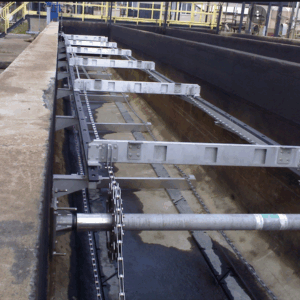


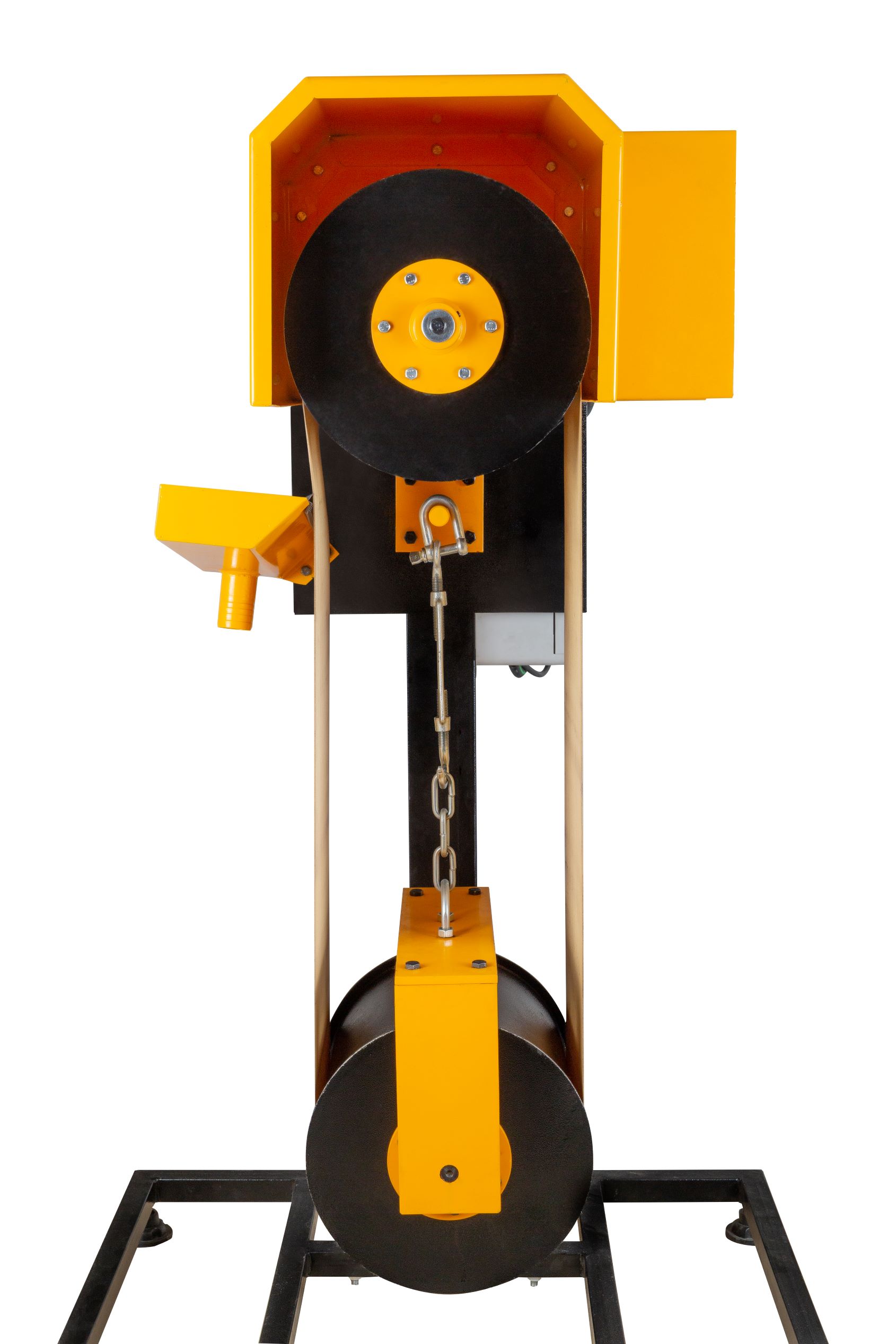
In many factories and small and large industries such as refineries, petrochemical plants, etc., due to operation, the likelihood of mixing water and petroleum-based materials is very high.
Therefore, to absorb, separate, and remove surface oils from water, a device called an Oil Skimmer is used.
The surface collection method using skimmers is the simplest and most effective way to separate oil, grease, and other hydrocarbons from water.
The operating principle of all skimmers is based on specific gravity, surface tension, and transferring oil using a moving component from the water surface.
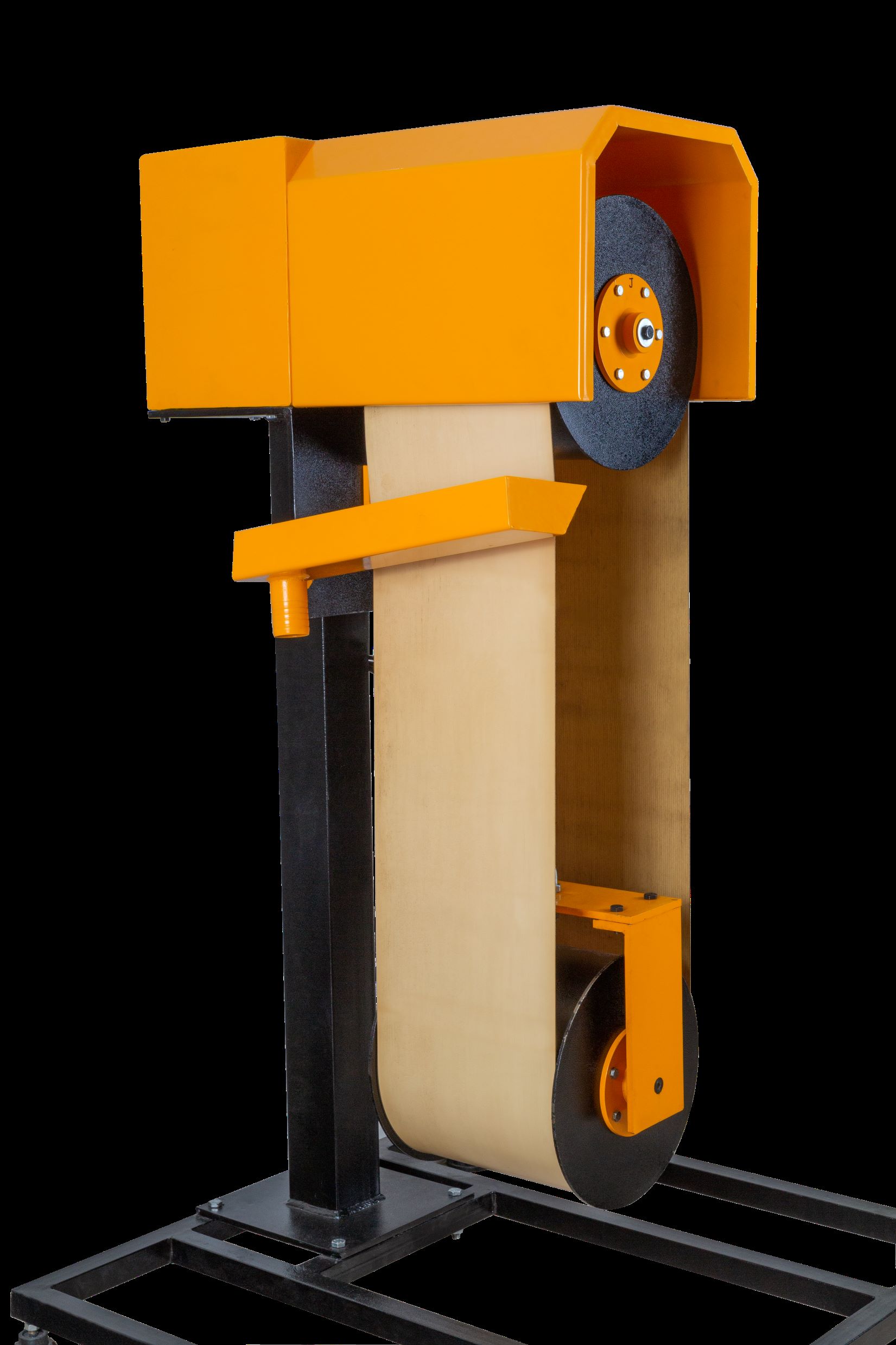
In general, oil adheres to surfaces more readily than water. When the oil-absorbing component passes through the water, oil, grease, or petroleum materials stick to the immersed absorbent surface due to surface tension, are removed from the water surface, and then separated by scraper blades located in the recovery section of the device.
This cycle repeats continuously to perform the physical separation of hydrocarbons from water.
In general, skimmers (Oil Skimmer) are categorized based on their operating mechanism as follows:
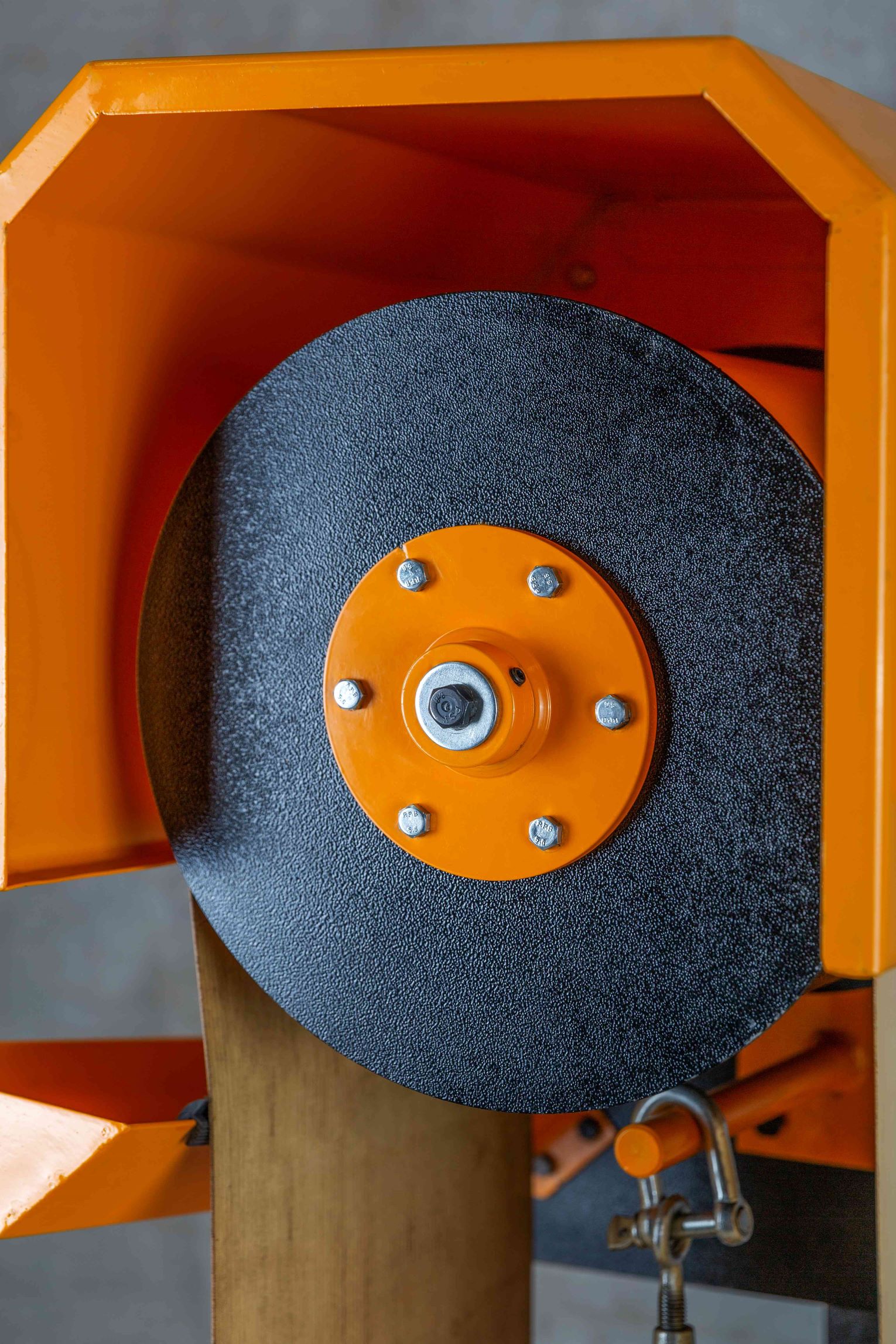
| Belt Oil Skimmer | Disk Oil Skimmer |
| In a belt skimmer, a metal belt or an oil-absorbent material is used in a closed cycle. After oil absorption, the belt enters the device’s chamber, the absorbed oil is scraped off, and collected in the oil tank. |
In this type of skimmer, a rotating disk or plate is used to collect oil from the water surface. |
 |
 |
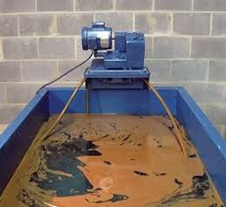
| Tube Oil Skimmer | Floating Suction Skimmer |
| Tube skimmers use a floating plastic hose. In this type, the hose enters the main chamber similar to the belt type, and the oil is removed from its surface. |
This type of skimmer floats on the water, and the suction inlet remains floating on the water surface. These skimmers are suitable for relatively thick oil layers. The discharge unit is located outside the water. |
 |
 |
| BELT OIL SKIMMER | |||||||
| Model | Capacity (L/h) | Belt Width (mm) | External Dimensions (mm) | Power (w) | Weight (Kg) | Material | |
| AMS-OS/BLT-75 | 35-110 | 100 | 300 x 480 x 268 | 40 | 30 | SS304 | |
| AMS-OS/BLT-125 | 70-220 | 150 | 377 x 608 x 380 | 40 | 45 | SS304 | |
| AMS-OS/BLT-225 | 90-270 | 200 | 450 x 608 x 380 | 60 | 55 | SS304 | |
| AMS-OS/BLT-275 | 140-340 | 300 | 800 x 775 x 524 | 90 | 90 | SS304 | |
| AMS-OS/BLT-375 | 180-500 | 400 | 800 x 785 x 524 | 90 | 110 | SS304 | |
| DISC OIL SKIMMER | ||||||
| Model | Capacity (L/h) | Disc Diameter (mm) | External Dimensions (mm) | Power (w) | Weight (Kg) | Material |
| AMS-OS/DSC-10 | 5-20 | 200-500 | 500 x 400 x 380 | 40 | 35 | SS304 |
| TUBE OIL SKIMMER | ||||||
| Model | Capacity (L/h) | Tube Length (M) | Tube Diameter (mm) | Power (w) | Weight (Kg) | Material |
| AMS-OS/TUB-500 | 10-500 | 20-100 | 16-22 | 120-370 | 25 | SS304 |
| FLOATING SUCTION SKIMMER | ||||||
| Model | Capacity (L/h) | Suction Head | Absorption Device (mm) | Power (w) | Weight (Kg) | Material |
| AMS-OS/FLT-50 | 50 | 1 | 370 x 70 x 225 | 15 | 10 | SS304 |
| AMS-OS/FLT-80 | 80 | 1 | 370 x 70 x 225 | 15 | 15 | SS304 |
| AMS-OS/FLT-300 | 300 | 4 | 550 x 110 x 225 | 550 | 55 | SS304 |