

Our many years of experience in the design, fabrication, and separation of hydrocarbon–water mixtures in accordance with international standards
have enabled us to continuously improve our designs and deliver
systems with higher performance levels and purer separation results.
One of the main causes of system component failure in separators is the inability to remove thick and sticky sludge.
Therefore, selecting the right materials and using engineered equipment helps reduce maintenance requirements, increase lifespan, and lower operator dependency.
Over the years, we have gained a comprehensive understanding of the applications, process requirements, and operational conditions of API separators.
This experience, combined with our commitment to customer satisfaction, has resulted in smooth project execution, safe operation, and long-term reliable system performance.
Oils or hydrocarbons are among the main pollutants of industrial wastewater, especially in refineries and petrochemical plants.
These oils exist in water in the following forms:
Free oils float on the water surface due to density difference and can be removed using gravity separation.
Emulsified oils, due to their extremely small size, do not float easily and require DAF for removal.
Dissolved oils require advanced chemical or biological treatment processes.
The API separator is typically the first and most important step in refinery wastewater treatment.
Its primary function is to remove the bulk of free oils and suspended solids before the wastewater enters advanced treatment stages.
The API consists of a shallow rectangular basin that provides sufficient retention time for oil to float to the surface.
The calm flow helps improve gravitational separation.
Oil and grease droplets rise to the surface and are collected by a surface skimmer.
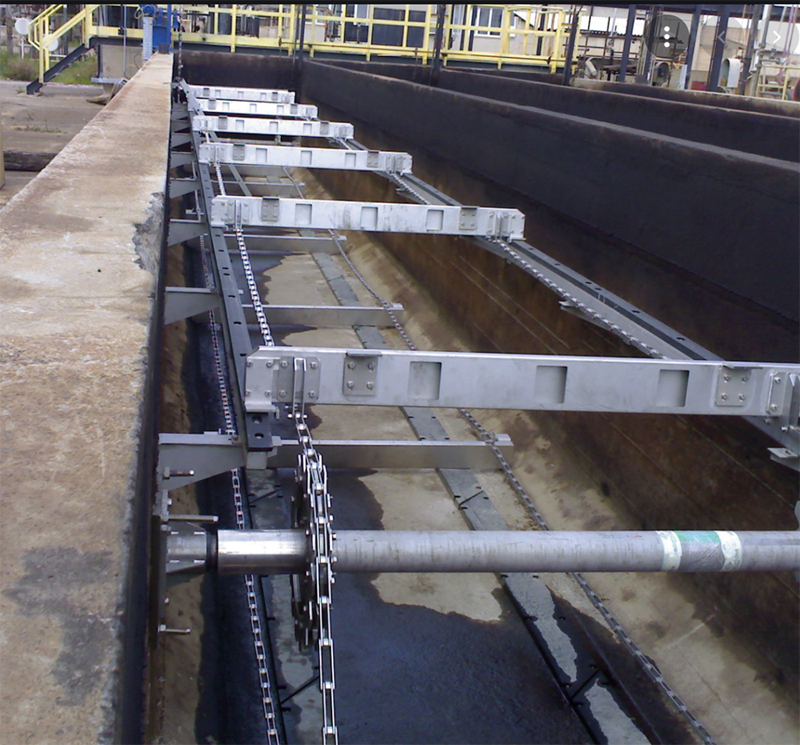
At the bottom, settling particles such as sludge and heavy debris are collected by a sludge scraper.
API can remove free oil, non-emulsified fats, and large suspended solids such as bolts, plastics, metal pieces, etc.
However, it has limited ability to remove stable emulsified oil and contaminants such as COD, BOD, and dissolved organic matter.
It should be noted that API separators are not suitable for removing stable emulsified oils and have limited performance in removing dissolved contaminants.

Depending on process requirements and design conditions, an API Separator may include various components.
The table below shows the main parts of this equipment.
| API Separator Main Parts | ||||
| Remark | Material | Description | Equipment | Row |
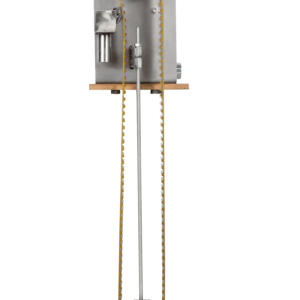
| In hazardous areas explosion proof motors must be used | Acc. To Spec | Electromotor-Gearbox | Drive Unit | 1 |
| Size and length depend on sump dimensions | Polymeric / S.S | Flights work as surface scrapers and sweep settled sludge from the bottom | Flight | 2 |
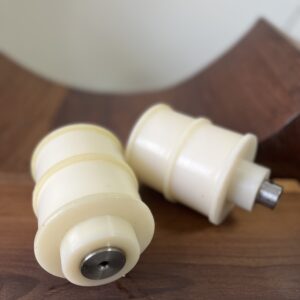
| Size and length depend on total forces | Polymeric / S.S | The transmitter of drive force to flights | Chain & Sprockets | 3 |
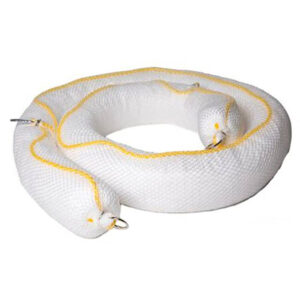
| Polymeric / S.S / Concrete | The oil skimmer collects surface oil; may be adjustable or fixed | Oil Skimmer | 4 | |